
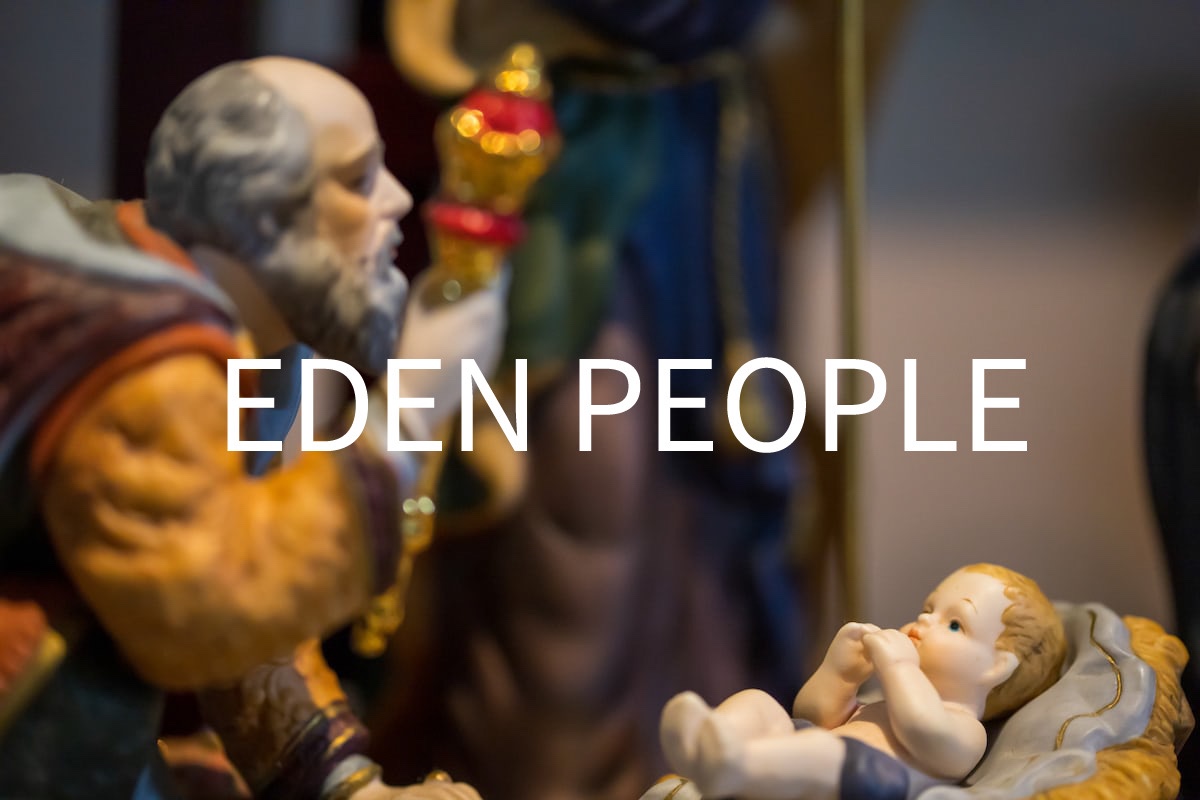
Eden People – The Magi of Epiphany

In the beginning, God created the heavens, the earth, and a garden somewhere in the East. Genesis 2 tells us the garden of Eden, the original heaven on earth, was established in the East.

Now in the book of Matthew, we have mysterious, wise men hailing from the
East. They worship a single God, believe in a coming Messiah, and look forward to a reordering of this world where good triumphs over evil. Unlike the priests and leaders hanging out in Jerusalem, these men are not beholden to the power and brutality of worldly leaders. These men move through this world confidently, seeking truth, following a star across the night sky like Israel once followed a pillar of fire through the wilderness. Their faith is strong, and their expectations are high.

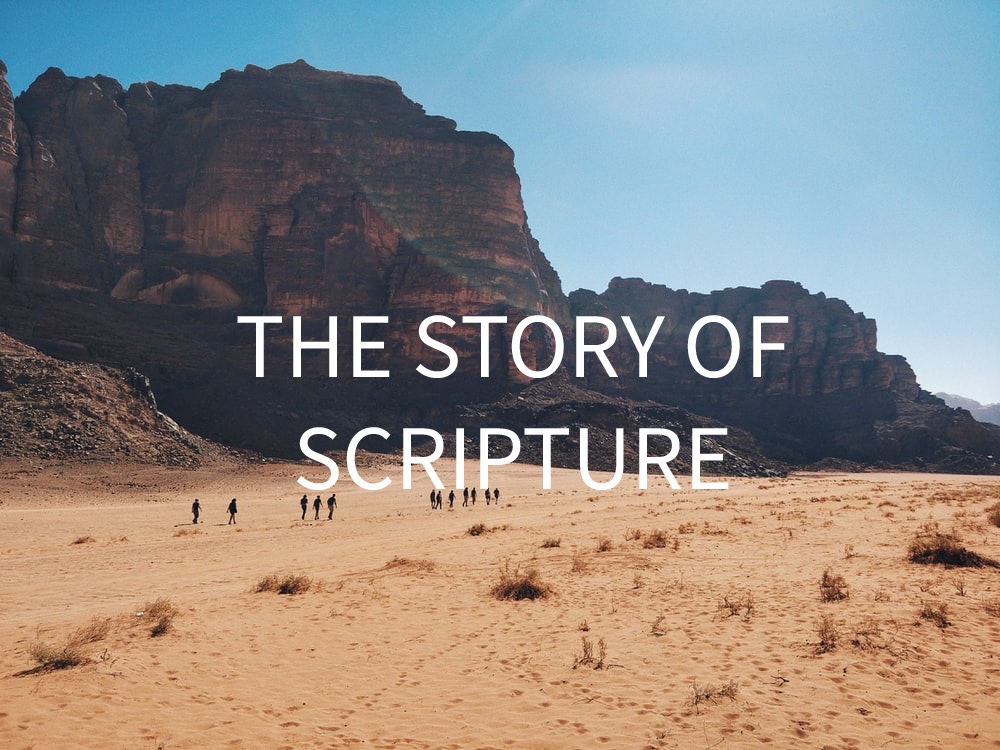
They are looking for the king of the Jews. They want to worship the king of the Jews. They are gentiles, outsiders, but they see Messiah just on the horizon, and they are moving through wilderness to honor and adore him.

These wise men from a long-lost Eden, Kneel before a baby, a child, the most powerless and innocent creatures. Oh, how Herod must have sneered when these travelers walked back out of his palace onto the dusty Road taking their treasures with them.

These gifts were meant for messiah.

These gifts were meant for the one who could rule with justice and equity — for one who leads goodness in triumph over evil.

These gifts were meant for one in tune with God, a holy arbitrator who reconciles his people.

These gifts were meant for the one who brings healing and life, not brutality and slaughter.

These gifts, well, these gifts were meant to adorn a body for burial, the body of the king of the Jews willingly sacrificed, utterly humiliated, and buried in a tomb.

And where are you in this story? And where am I in this story? Do we sit in the halls of power, conspiring to ensure our own security, and our own position at the top of the political order by trampling anyone weaker? Maybe, sometimes, in ways that we’d rather not admit.

But on our best days, in those moments, we are captivated by a light shining in the darkness – We can be like the magi.

We are called to be like the magi. We are called to be Eden People. We are called to be Heralds of the Kingdom of God. The spirit moves us to speak truth, seek goodness, and champion justice without fear or regard for those in power. We are to bring our best gifts and our best selves to the feet of Jesus.

And we are not distracted by the magnetism or ruthlessness of false kings.

And there are a lot of false kings.

I encourage you to think about these wise men, about the kind of people they are. The sort of religious movement they represent. The place from where they traveled and the star which showed them the way. Think about the people they upset and the gifts that they brought, and, most importantly, the child whom they adored. The Messiah, the King of the Jews, Jesus Christ, the Son of God, our savior.
Division and Decline – God as Father

When Israel was a child, I loved him, and out of Egypt I called my son. But the more they were called, the more they went away from me. They sacrificed to the idols and they burned incense to images… they did not realize it was I who healed them. Hosea 11:1-3

Once upon a time there was a young man, a teenager, who was struggling on the inside. He spent a lot of time alone in his room, and his parents began to worry. They tried to reach out to him, but the more they tried to get him to talk the more he shut down. They started to fight a lot. One evening, his mother was gathering up the piles of dirty laundry in his room and found a stash of pills she didn’t recognize. Not knowing what to do, they decided to call the pastor. “I don’t know what to do anymore,” said the father, his heart torn within him. “The more we reach out the more he shuts down. I feel like the enemy.”

Many prophets in the Bible received their own book, and Hosea is one of them. He worked as a Prophet during the reign of the Kings of Israel. In fact, his book is the only writing we have from someone who lived in the northern Kingdom. Every other book in the Bible was written by someone who lived in the South.

Hosea offers us a unique perspective on what prophecy was like in the declining northern Kingdom. Perhaps his most wonderful contribution as a prophet comes from the 11th chapter.

Hosea records God pining after the people of Israel and he characterizes God’s love as that of a father. The entire passage is filled with rich images of a nurturing, healings, and loving God. One theologian says that when we read Hosea 11, “we penetrate deeper into the heart and mind of God than anywhere in the Old Testament.”

Hosea presents the exact description of God that Jesus has in mind when he taught his disciples to pray saying, “Our Father, who is in heaven.” Hosea and Jesus try to help us understand what God is like. Our God loves with passion and tenderness, and our God can be hurt by our actions.

Exodus and Wandering – The Greatest Commandment

Hear, O Israel: The Lord our God, the Lord is one. Love the Lord your God with all your heart and with all your soul and with all your strength. Deuteronomy 6:4-5

This verse comes to us during the period of the Exodus, a time when the Israelites were trying to become the people of the living God. It grows into an important Creed throughout the history of Judaism. It is known as the Shema, which is the first word of the saying in Hebrew. Shema means “hear” or “listen” in Hebrew. Observant Jews would recite this verse daily and teach it to their children as a bedtime prayer. They also made an effort to have the Shema be their last words before dying.

About 1300 years after the Exodus, a popular Jewish teacher decided to set up shop in the temple courtyard to preach to the people, and they were astonished at what he had to say. Massive crowds came to hear him talk, and the established teachers became jealous of his popularity. They didn’t trust he knew what he was talking about.

One of them, who was an expert in the Law, tested him with a question, asking which is the greatest commandment in the Law? The popular teacher replied by citing the Shema, the same thing he’d been taught to say since he was a young boy. “‘Love the Lord your God with all your heart and with all your soul and with all your mind. However, he followed up the Shema with something unusual but profound. “’ This is the first and greatest commandment,” he said. And the second is like it: ‘Love your neighbor as yourself.”

Jesus Christ, the popular teacher from the temple courts, knew that the core of God’s teaching has been the same for thousands of years. Generations have recited the Shema as a form of prayer and a way to remind themselves of God’s call for our devotion. But Jesus bound the truth of the Shema to another, but similar truth found in the book of Leviticus, “you shall love your neighbor as yourself.” Jesus teaches that the entire story of Scripture hangs on these two commands. As we conclude the story of the Exodus, consider where have you seen these twin commandments show-up in our devotions so far.

Why do you work in ministry?

I was asked recently to reflect on this question for a mini-staff retreat, and I thought I’d post the answer since, as true as it is, my reasons still confuse me….

20140918-170409.jpg

I do not so much feel called to ministry, as I feel created for ministry. Not long ago, I was discussing this topic with some fellow seminary students. We discussed our relationships with friends outside the seminary bubble and how frustrated we were sometimes not to have the same luxuries and clarity as them. One of my friends even confessed, quite rightly, that it was sometimes even embarrassing. And yet, we all shared a general notion that there is nowhere else we could. We were supposed to be here at Candler, studying the Bible and theology, and generally preparing for religious leadership.

Reflecting back, I am reminded of the Peter’s confession in John 6 after the feeding of the 5000. Jesus gives a difficult teaching concerning eating of his body and drinking of his blood, and most of the crowds turn away from him. Jesus asks his disciples if they will abandon him as well, to which Peter replies “Lord, to whom shall we go? You have the words of eternal life, and we have believed, and have come to know, that you are the Holy One of God.” (John 6:68, 69 ESV)

I sometimes feel like I wound up on this journey by accident, or at least so far back I don’t remember the beginning. It’s like hiking an unmarked trail deep into the woods, vague as to the destination, but sure it will be worth it.

(Photo By: https://www.flickr.com/photos/liebermann/)