Eden People – The Magi of Epiphany

In the beginning, God created the heavens, the earth, and a garden somewhere in the East. Genesis 2 tells us the garden of Eden, the original heaven on earth, was established in the East.

Now in the book of Matthew, we have mysterious, wise men hailing from the
East. They worship a single God, believe in a coming Messiah, and look forward to a reordering of this world where good triumphs over evil. Unlike the priests and leaders hanging out in Jerusalem, these men are not beholden to the power and brutality of worldly leaders. These men move through this world confidently, seeking truth, following a star across the night sky like Israel once followed a pillar of fire through the wilderness. Their faith is strong, and their expectations are high.

They are looking for the king of the Jews. They want to worship the king of the Jews. They are gentiles, outsiders, but they see Messiah just on the horizon, and they are moving through wilderness to honor and adore him.

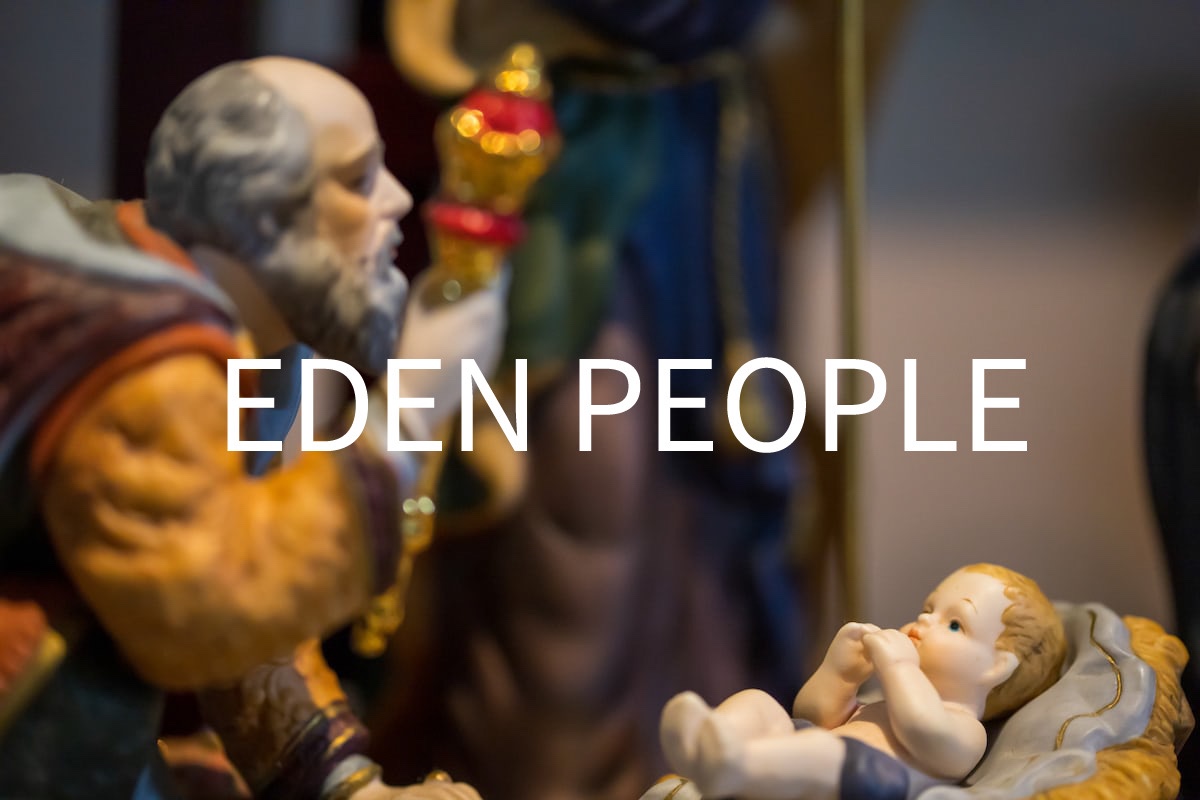
These wise men from a long-lost Eden, Kneel before a baby, a child, the most powerless and innocent creatures. Oh, how Herod must have sneered when these travelers walked back out of his palace onto the dusty Road taking their treasures with them.

These gifts were meant for messiah.

These gifts were meant for the one who could rule with justice and equity — for one who leads goodness in triumph over evil.

These gifts were meant for one in tune with God, a holy arbitrator who reconciles his people.

These gifts were meant for the one who brings healing and life, not brutality and slaughter.

These gifts, well, these gifts were meant to adorn a body for burial, the body of the king of the Jews willingly sacrificed, utterly humiliated, and buried in a tomb.

And where are you in this story? And where am I in this story? Do we sit in the halls of power, conspiring to ensure our own security, and our own position at the top of the political order by trampling anyone weaker? Maybe, sometimes, in ways that we’d rather not admit.

But on our best days, in those moments, we are captivated by a light shining in the darkness – We can be like the magi.

We are called to be like the magi. We are called to be Eden People. We are called to be Heralds of the Kingdom of God. The spirit moves us to speak truth, seek goodness, and champion justice without fear or regard for those in power. We are to bring our best gifts and our best selves to the feet of Jesus.

And we are not distracted by the magnetism or ruthlessness of false kings.

And there are a lot of false kings.

I encourage you to think about these wise men, about the kind of people they are. The sort of religious movement they represent. The place from where they traveled and the star which showed them the way. Think about the people they upset and the gifts that they brought, and, most importantly, the child whom they adored. The Messiah, the King of the Jews, Jesus Christ, the Son of God, our savior.
Exile – The Fall of Jerusalem

An official of the king of Babylon, came to Jerusalem. He set fire to the temple of the Lord, the royal palace and all the houses of Jerusalem. Every important building, he burned down… he carried into exile the people who remained in the city. 2 Kings 25:9, 11

A few years ago, archaeologists in Israel discovered 2000-year-old date palm seeds in the Masada fortress on the edge of the Dead Sea. The seeds were preserved in the hot and dry conditions of the desert and had likely been there since the time of Jesus. A researcher decided to plant these seeds on a whim to see if they’d grow. Several of the seeds sprouted up from the pot, making them the oldest seeds in the world to do so. The plant began to grow so big they had to move it to a bigger pot.

In 586 BC, roughly 2500 years ago, the Babylonian army broke through the walls of Jerusalem. They ransacked the beautiful temple dedicated to the Lord, and most of the city was burned to the ground. Anyone watching would have assumed that was the end of the story of God. The temple was destroyed, the city was conquered, and the people were gone. God promised Abraham a nation with land. God promised David a King on the throne. Now there was nothing.

However, unlike their northern neighbors, the story of the people of Judah does not end in total destruction. The Babylonians kidnapped many of the inhabitants of Jerusalem and took them away to serve in Babylon. Thankfully, the people of Judah retained much of their identity while living in a foreign land. When they left Jerusalem, the people took with them their holy books, their traditions, in their dedication to the living God.

Like the 2000-year-old date palm seed, the people of God began to bide their time. Their nation was preserved in the hot dry climate of the Babylonian empire. Israel’s family tree was once like a mighty oak, but the people leaving in exile were just a small seed. Sometimes, God allows us to experience exile so that we may come back stronger than ever.

Division and Decline – The fall of Israel

The king of Assyria captured Samaria and deported the Israelites to Assyria…All this took place because the Israelites had sinned against the Lord their God, who had brought them up out of Egypt from under the power of Pharaoh king of Egypt. They worshiped other gods and followed the practices of the nations the Lord had driven out before them. 2 Kings 17:6-8         

On 14 April, 1912, Frederick Fleet was serving as lookout when he spotted an iceberg immediately ahead of Titanic during her first trip across the ocean. He quickly raised the alarm, and the first mate ordered the ship to change course. But it was too late. The Titanic struck the iceberg, and it soon became clear that the ship was doomed. No one on board was prepared for such an emergency. In accordance with safety practices at that time, ships were thought to be unsinkable.The Titanic only had enough lifeboats to carry about half of those on board. Nearly 1,500 lives were lost.

In a lot of ways, the fall of the Northern Kingdom was a lot like the sinking of the Titanic. For generations, the prophets had warned the people in Israel that God was unhappy with their faithlessness. They continued to worship other gods and turn away from the Lord. Eventually,  the prophets’ message shifted. They stopped asking Israel to change and started warning Israel that God’s punishment was coming. There was an iceberg on the horizon and not everyone would escape.

In 722 BC the northern kingdom was destroyed by their neighbors the Assyrians. The Assyrians broke through the walls of the capital city Samaria and killed many of its inhabitants. Then they kidnapped anyone who might be useful and took them away to work on building the Assyrian empire.

The fall of the Northern Kingdom reminds us how seriously God treats unrepentant sin. Periodically, we all should pause and take stock of our own lives. Bad decisions can lead us to a point of no return, and we will suffer the consequences of our sinfulness. Today, spend time searching your heart for any sin that could sink your faith, and ask the Lord to make you whole again.

Kings and Prophets – Solomon and God’s Temple

But will God indeed dwell with men on the earth? Behold, heaven and the heaven of heavens cannot contain You. How much less this temple which I (Solomon) have built! Yet regard the prayer of Your servant … Hear from heaven Your dwelling place, and when You hear, forgive. 2 Chronicles 6:18-19; 21

King Solomon followed his father David on the throne of Israel . His mother was actually Bathsheba from yesterday’s story. Solomon is famous for being a wise king, and he was also very rich and successful. From the beginning of the Bible up to the time of Solomon, there had never been a formal building in which to worship God. For most of Israel’s history, the people had wandered in the desert as nomads. Anytime they settled down, they erected a tent for worship which they called a Tabernacle. Finally, after all the years and wandering, wars, and weariness, King Solomon organizes the people to build a temple for God in the capital city of Jerusalem.

If there was ever a high point in the story of the Old Testament, this is it. Israel was at that time a mighty nation with a celebrated king. Though a nation of many tribes, the people were united across the land. They had enough wealth and dedication to God to build a magnificent temple, and that Temple symbolizes two major themes found throughout Scripture. The first is God’s presence with God’s people. The second is that God will make a way to forgive our sin.

As the people celebrated God’s dwelling in the temple, King Solomon acknowledged the ludicrous idea that God could be contained inside the walls of a building, no matter how splendid. Moreover, hadn’t God been living with the people of Israel this whole time? When Abraham left his home to travel to an unknown land, wasn’t God with him? When Moses led the Israelites out of slavery in Egypt, wasn’t God with him? When the people of Israel wandered the desert, conquered the land, and established a nation to the holy and set apart, wasn’t God with them?

God was with them just like the Holy Spirit is with us today. God is present with us and whenever we cry out God will respond freely with forgiveness and grace.

Kings and Prophets – The Sin of David

This is what the Lord, the God of Israel, said to David: ‘I anointed you king over Israel, and I delivered you from the hand of Saul… I gave you all Israel and Judah. And if all this had been too little, I would have given you even more. Why did you despise the word of the Lord by doing what is evil in his eyes?2 Samuel 12:7-9

Even though King David was a great king, he was still a human king. He ruled over Israel for forty years, and eventually he messed up, and messed up bad. While his army was away defending the country, he decided to take the wife of one of his soldiers. Her name was Bathsheba. When she became pregnant, David arranged for her husband Uriah to be killed in battle.            

David had become greedy and prideful. He was the most powerful and privileged person in the entire country, and he decided to abuse that power and privilege to satisfy his own desires. What is crazy about this story is not just David’s greed and evil actions, but the way God responds. God says, “if everything you had was too little, I would have given you even more.” God is disgusted by the evil he has committed against Uriah and Bathsheba, but God is also offended that David was not satisfied with everything already given to him.

David’s lack of gratitude is underscored in the story by the name of the prophet sent to correct his actions. When David took Bathsheba from Uriah, God sent the Prophet Nathan to set him straight. Nathan’s name literally means “he has given.” So David is reminded of God’s generosity whenever he says the name “Nathan.”

David committed theft and murder against the people of his kingdom, and David also spurned God’s generosity and abused God’s goodness. What we learn from this story is that every sin committed against other people is also committed against God. Our Heavenly Father takes our sin personally. To be faithful disciples, we must spend time reflecting on our own sin and confessing it to our God who is eager to forgive us.

Kings and Prophets – Humble David

“Now then, tell my servant David, ‘This is what the Lord Almighty says: I took you from the pasture, from tending the flock, and appointed you ruler over my people Israel.’” Then King David said: “Who am I, Sovereign Lord, and what is my family, that you have brought me this far? 2 Samuel 7:8, 18           

King Saul, the first king of Israel, was kind of a dud, so God had the Prophet Samuel go out and find a new king who was named David. As a boy, David lived a rough and tumble life. He demonstrated great courage and remarkable faith. He spent his childhood protecting his father’s sheep in the wilderness, fighting off bears and lions. When Israel went to war, he volunteered to fight the giant Goliath with just his sling and a few stones, having faith that God would give him victory. Eventually, he became a general in King Saul’s army and showed great courage, wisdom, and valor.

The Bible calls David a man after God’s own heart. But what was the key to his success? Humility. A humble person is not tempted to put their needs before the needs of others. A humble person does not take any gift or responsibility for granted. When a humble person is bestowed with glory and prestige they ask “who am I that I would be honored in this way?” The beginning of David’s reign is characterized by this humility.

Humility helps us know exactly who we are. A humble woman has a clear-eyed view of her strengths and weaknesses. A humble man knows real strength comes, not from hoarding power, but extending power to others.

Poet and theologian Thomas Merton reminds us that “Pride makes us artificial; humility makes us real.” Way back at the beginning of the story of the Bible, it was pride that caused Adam and Eve to choose to disobey God. Much later on in the story, it is humility which drives Jesus Christ to forsake the riches and comforts of heaven to die a sinner’s death on the cross to rescue us from sin. How can you better cultivate the attitude of holy humility needed to be a faithful servant of God?

Kings and Prophets – The Real Superhero

Samuel said to all the people, “Do you see the man (Saul) the Lord has chosen? There is no one like him among all the people. Then the people shouted, “Long live the king!” But some scoundrels said, “How can this fellow save us?” They despised him and brought him no gifts. But Saul kept silent. 1 Samuel 10:24, 27     

It seems like every few months a new superhero finds its way into our culture. It used to be a Marvel movie or occasionally a DC hero that was the next blockbuster hit. However, with tons of streaming platforms, now we are being bombarded with superhero tv shows every time we sit down to watch something. As a culture, we are obsessed with the idea that an extraordinary human can save the day, can even save us.

The first king selected to rule over the people was not a very good one. God knows that all humans are sinful and flawed, so God wanted to rule over the people as King. Instead, the people requested a human king and they were given Saul. Some thought he’d be superhuman, that he would be able to save all Israel. But that is of course too much to ask of a human king. Some people immediately regretted their decision to ask for Saul to be king. “How can this fellow save us?” they asked each other. They realized that super-humans are really just fairytales.

More than 1000 years after the reign of King Saul, another guy named Saul will write a letter to a church in the town of Philippi. He will remind the church that there is still hope for God to be King, in the person of Jesus Christ. King Jesus will finally rescue God’s people, redeeming them from sin and death. God will give Jesus a name above all names so every knee should bow to Jesus, God on earth, as king and savior. Imagine Jesus on the throne of your heart as King and Savior. Allow him to rule in your life knowing that he is more powerful than any human being.

Kings and Prophets – Living Like a Prophet

But when they said, “Give us a king to lead us,” this displeased Samuel; so, he prayed to the Lord. And the Lord told him: “Listen to all that the people are saying to you; it is not you they have rejected, but they have rejected me as their king. 1 Samuel 8:6-7

In the story of Scripture, Israel is first ruled by judges, then it is ruled by kings. The kings were not part of the original plan. God intended to rule over the people of Israel as the real King, not have some human on the throne. However, the people are insistent. They see all the countries around them that have a king, and they want to be like the people around them.

In today’s passage, it is a man named Samuel who prays to God on behalf of the people to ask for a King. Samuel is a prophet. Now, some people think prophets are people who predict the future, but in the Bible a prophet is simply someone who speaks to the people on God’s behalf. Samuel is dedicated to serving God, so he is frustrated that Israel asks for a King to rule them. God tells him not to take it personally. The people haven’t rejected Samuel. Although God has been nothing but faithful, the people have rejected God.

Kings are very powerful. In ancient times, Israel’s neighbors would have worshiped their kings as gods on earth. If Israel is already rejecting God as their king, they may be tempted to reject God as God. Throughout the reign of Israel’s Kings, God also raises up prophets in each generation to speak the truth to kings and citizens alike.

The life of a prophet is very difficult. They must be wise enough to listen to God and have the courage to speak out. Many prophets are rejected, imprisoned, and even killed for speaking the truth of God to people who don’t want to hear it. Prophets are not just something we find in the Bible. There are modern day prophets who have worked and suffered for God’s cause. We are all called to speak up for what is right. Ask God for the wisdom and courage to live like a prophet in the world today.