
Conquest and Judges – Ruth and Naomi

But Ruth said, “Do not press me to leave you or to turn back from following you! Where you go, I will go; where you lodge, I will lodge; your people shall be my people, and your God my God. Where you die, I will die— there will I be buried…” Ruth 2:16-17

Some of the most popular jokes in movies and on tv are about in-laws. Frustrations about in-laws in general are a common theme from shows like Modern Family and Everybody Loves Raymond, and movies like Monster-in-Law and Meet the Parents. Relatives are always a challenge, but even more so when they are not blood related. 

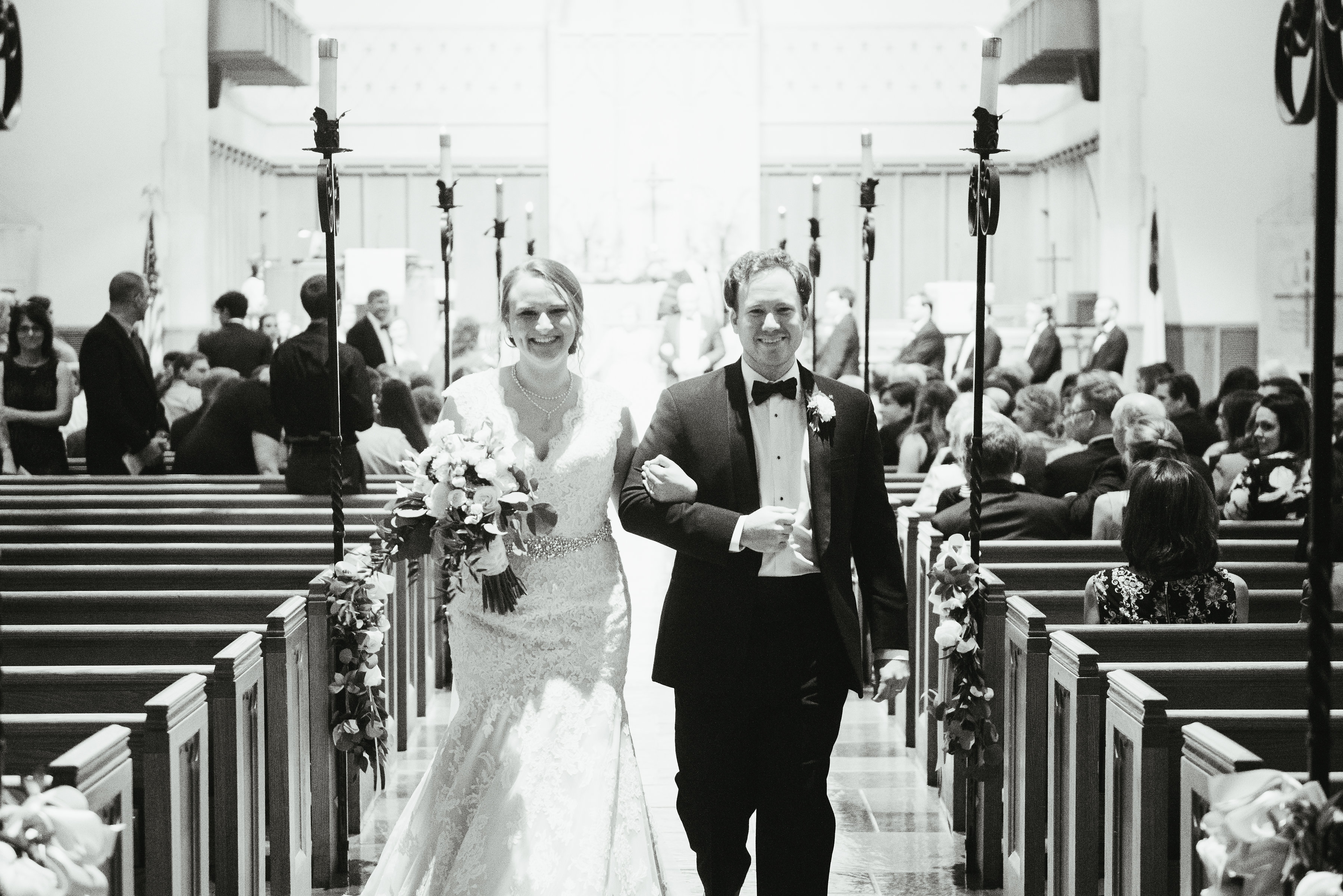
For this reason, it’s interesting that this passage is actually most often used in wedding ceremonies, the process through which families are united and in-laws created.

In the story, Naomi, a Hebrew, is the mother-in-law to both Ruth and Orpah who are Moabites. After the death of all three women’s husbands, Naomi begs her daughters-in-law to leave her and find new husbands. They were not born into the Hebrew clan, and they are young enough to start their lives over somewhere else rather easily. Orpah departs, but Ruth decides to stay. She selflessly vows to live with Naomi, travel with her, worship with her, and remain faithful to her God and people for the rest of her life. 

Ruth goes on to marry one of Naomi’s relatives in order to restore her claim on the family land. She even has a child with her new husband, Boaz, whom they named Obed. The baby grows up to become grandfather to King David. The book of Ruth is a story of conversion. It’s unique because it shows how foreigners joined the family of Abraham, and even contributed to the bloodline of kings.

Ruth and Naomi understood the selfless love of God. They worked for one-another and not their own personal interests, and together they triumphed. It is a selfless love which we are all called to model as people redeemed by God through Christ. Naomi and Ruth’s generous actions became the seed from which the Tree of Jesse flourished to bear the fruit of King David, ancestor of Jesus Christ. May all of our selfless actions give birth to something beautiful as we see the family of God grow.


Love – Our Superhero

When you pass through the waters, I will be with you, and when you pass through the rivers, they will not sweep over you. When you walk through the fire, you will not be burned; the flames will not set you ablaze. –  Isaiah 43:2 (NRSV)

Lately, it seems as if everyone is obsessed with superheroes. There are new superhero movies out several times a year and every streaming platform has their own show following the antics of superhuman crusader. Maybe you follow Agents of Shield, The Boys, or The Umbrella Academy.

This verse from Isaiah reminds me of superheroes. It comes to us as a promise from God. It’s written as a bit of poetry and says that God will be with us in times of trial to prevent us from getting hurt. The way it is written it sounds like whenever we are confronted by a challenge God will allow us to breeze right through it like Wonder Woman or Superman. This verse reminds me of the age old saying that God won’t give you more than you can handle. By the way, that saying isn’t actually in the Bible, and I have to disagree.

The focus of today’s passage is not God’s protection from harm. Rather, we are supposed to pay attention to the five little words, “I will be with you.” Here’s the thing, there will definitely be times in life when you feel like you’ve got more than you can handle.

In the Bible, God gave people more than they could handle all the time, and, this year, everyone feels like they’ve got way more than they can handle. Instead, God promises that he will be with us when challenges come our way. He promised to walk through raging rivers and fierce flames by our side. With God we will survive. More than that, with God we will have salvation.

Despite what we see in TV and movies, there has only ever been one super human to walk the earth. That hero’s origin story includes being born in a barn and sleeping in a manger. He was a lowly peasant who suffered just like us. But the whole world knows and celebrates his story more than any hero in history. Take time today and reflect on how Jesus has been a hero in your life.

Love – Called by Name

Do not fear, for I have redeemed you, I have summoned you by name; you are mine. –  Isaiah 43:1 (NRSV)

In 2012, an independent film called Beast of the Southern Wild was released. The movie was about a little girl named Hushpuppy trying to survive, mostly on her own, in the bayou of Louisiana. The young actress who played Hushpuppy auditioned for the role at just five years old. In 2013, at age nine, she became the youngest nominee for Best Actress, first African-American child actor to earn an Oscar nomination, and the only person born in the 21st century to be nominated for an Academy Award. Her name is Quvenzhané [Kwa-Vin-Je-Nay] Wallis.

That’s probably not a name you hear a lot. In the middle of her success, Hollywood was having a difficult time making sense of her, and especially, her name. TV Personalities decided to bypass the issue by giving her the nickname “Little Q,” a nickname she did not request.

It may seem harmless, but the message was clear. Despite her enormous success and talent, her name was not worth knowing. She’s not the only actor who’s had a hard time because of their name. Actors James Rodriguez and Ramón Estévez changed their names to sound less Hispanic and be taken more seriously. You may know them by their stage names James Roday and Martin Sheen.

In Isaiah 43:1, God calls out to his people with words of tender love saying “don’t be afraid because I have made everything alright. I am calling you by name, your real name. You are my child and you are worth knowing. The real you, not the mask you put on to make others feel comfortable. I love you as you are.” To call someone by their name seems so ordinary. We do it all the time without thinking. However, when the God of creation stoops down to our level, he takes great care to refer to us by name. Jesus wants us to know that we matter and that we are loved for who we are.

As Christmas draws even closer, you might find your name written on the tags of gifts or in the address line of a greeting card. Whenever you see your name written this week take time to reflect on God’s personal call on your life. You matter. You are loved. You are the recipient of the most wonderful gift, and it’s addressed specifically to you – the gift of salvation wrapped in human skin.

Love – The Potter’s Hands

O LORD, you are our Father; we are the clay, and you are our potter; we are all the work of your hand. – Isaiah 64:8 (NRSV)

Pottery was such an indispensable part of life during the time of the Bible. Nearly everything you ate, sold, wore or enjoyed was stored in or served on pottery. Each piece of pottery was entirely unique and handmade. That’s not the case today, but back then every plate, bowl, jug, and cup was formed by a skilled artisan working with clay.

If you have any experience working with clay, you’ll know there are a few things you need to go from a lump of dirt to a lovely work of craftsmanship. The first thing you need is water to make the clay malleable. Dried out clay cannot be formed and will crumble into dust. A proud and difficult heart is like dry clay in the hands of God. It will break apart and never become the beautiful creation God has planned.

If God is the potter of our lives, that means we must present ourselves to God as well watered clay. We must be willing to be lovingly molded by God, to let God lead us and shape us and make us something wonderful.

The other thing you need to make pottery is time. If God is shaping our lives it means we must be patient. God wants us to be perfect before the end, and perfection takes time. We are called to be humble and hopeful while God is working within us.

The final stage of making pottery is the kiln, the place in which the clay is heated and hardens. What’s interesting about pottery is that it can be both beautiful and useful. We use plates to serve bread and cups to drink water.

When the master potter is finished with us we will be beautiful and valuable. We will be equipped to love our neighbor who is hungry or thirsty through humble service. We can serve as tools for the kingdom of God.

Think about your own faith journey today. Have you offered yourself to God as a malleable piece of clay? Are you letting God shape and mold you with humility and love? If not, how can soften your spirit to better accommodate God’s work in your life. Where do you need to yield to God and stop trying to have your own way? And where can you serve as a faithful piece of God’s handmade pottery?

Love – God With Us

Therefore, the Lord himself will give you a sign. Look, the young woman is with child and shall bear a son and shall name him Immanuel. – Isaiah 7:14 (NRSV)

Have you ever been to a baby shower? Maybe it was for your own children. Or maybe you have younger siblings and can remember the anticipation of the coming baby? It’s such an exciting time waiting on a new addition to the family.

Perhaps, this season you will receive a Christmas card with a new face in the group. I guarantee wherever you see a new baby everyone is smiling a bit bigger. There’s a tad more joy when we add someone new.

This verse from Isaiah is a piece of prophecy pointing to Jesus. The young woman is of course Mary. But there’s something peculiar about this verse. It says that the new baby will be named Immanuel. Now, Jesus’ name isn’t Immanuel, it’s, well, Jesus. But we even have hymns that seem to refer to Jesus as “Immanuel.” So, what’s the deal?

Well, the name Immanuel in Hebrew translates to “God with us.” This verse should read something like: the child will be God-right-next-to-us. This means Immanuel is more of a title than a person’s name. In Matthew 1:23, this verse from Isaiah is referenced when the angel announces Jesus’ birth to Joseph.

God-with-us is exactly who Jesus is. He is the incarnation of the living God. He is heaven come to Earth. He has made his home among us mortals because of his love for us. He’s not social distancing but right up in our business. The overarching message of the Bible is just that: Immanuel, God is with us. God says, “I will be with you,” to Abraham when he is asked to leave home. God says, “I will be with you,” to Jacob when he fled from his brother to the wilderness. God says, “I will be with you,” to Moses when he brought the Israelites from slavery in Egypt into the promised land. And God says, “I will be with you,” to Mary when she finds out she will have a baby.

So, if Immanuel is a title or more of a description, how have you seen God with you this Advent season? Does it feel like God has been with you lately? Maybe it has felt like God was so far away he was on another planet. Take some time today to reflect on what it means that God is with us no matter what happens.

Better Than I Am

One of the books that convinced me to go into ministry is entitled This Odd and Wondrous Calling by Lillian Daniel and Martin Copenhaver. In the book, two preachers go back-and-forth talking about what it's like to go through the day-to-day work of ministry. My favorite chapter is entitled "Made Better Than I Am."

In the chapter, Copenhaver reflects on how ministry has forced him to be a better version of himself. He confesses that he does not always want to do the right thing or say the right thing. Sometimes, he wishes he could be petty or make a quip at somebody else's expense.  However, ministry has frequently been described as living in a fishbowl with everyone keeping an eye on you.  Copenhaver's roll as pastor has forced him to newer heights of spiritual maturity because parishioners are always watching.

KJp-11

Held to a higher standard, he would occasionally grow weary of what others expected of him, but he never grew to resent his situation. Instead, his "job" forced him to cultivate holy habits because he could not run away when it come time to pray in a hospital room or spend time with a difficult church member.

I find it interesting because he confesses that being in ministry makes you have to strive to be somebody else, somebody better than who you actually are, and that by pretending to be better than you actually become better. By striving to meet the expectations of others a minister is compelled to act in a manner worthy of their calling.

I didn't think anything could have the same affect as ministry on building someone's spiritual maturity. That's until I got married.

On its best days, marriage serves as the everyday practice ground for cultivation Christian virtue. In the honeymoon phase you develop this ideal picture of your spouse's character. That picture is way more flattering and impressive than the actual person; but, if the couple is loving committed to each other then there is this drive to live up to the ideal image created for you.

KJp-22

I've been married less than two months, and already I feel like I have to be better than I am. I can't slink off into the next room and sulk when I feel offended or frustrated. It's not fair to use the silent treatment as punishment, and it's not right to always play the victim card.

Not that we're having many arguments as newlyweds. 99% of the time we're still grossly in love and perfectly happy. However, being married means that I'm always being watched, and conversely, I'm always watching someone else. It's like having a live in accountability partner, but I suppose people who have been married more than ten minuets already know this.

Yet, on marriage's even better days, when you fail to live up to that wonderful person whom your spouse believes you to be, they are there to forgive you, and hold you, and maybe even let you be a little petty. They will encourage you to be better, but never lord it over you when you are not.

On it's even better days, marriage is where we have the a thousand opportunities to live like Jesus, to love like Jesus, and to forgive like Jesus. We are able to build each other up into the loving ideal we know that can be, but grace always covers us in the moments we can't measure up. Jesus loves all of us in just such a way. He knows we can be better and do better. But when we fail to live faithfully, he stands with open arms ready to forgive.

Why I took my husband’s name, but understand why others don’t do the same

I know it’s a long title, but I wanted to get the message across.  (Also, in full honesty, the paperwork hasn’t come back yet so legally my name hasn’t changed. )

I’m at a point in my life where a lot of my friends are getting married.

Thankfully, we live in an age that doesn’t assume any real tradition about weddings or marriage.  Marriage and weddings used to be so uniform, but today a marriage can freely serve as the creative expression of a couple in living out their respective callings in Christ.

Before I got married, I was grateful for every person who asked me if I intended to change my name.  Their questions acknowledge that it was a difficult choice to make, and that it was indeed a choice that could be made.  I didn’t have to make the change, and I know many women who have elected not to change their name.

I respect and celebrate any woman who chooses not to change their surname. There are many reasons why someone would choose to keep their “maiden” name.  Some element of it is about a woman’s freedom and independence.  For some women, they choose to keep their name because so much of their identity is bound up in that title.  This identity may be sentimental or it may be financial.  A person’s name can become so iconic for them it may prove detrimental to their career to change their name.ross-findon-303091

My hesitancy was really bound up in my love for my family, and the honor our family maintains.  I’ve had the name Hawkins my whole life, and it carries more meaning for me than my first name because it is associated with an extended community unit.

Although I have family who do not share the same surname as I do, there is something unifying about being surrounded by a bunch of people who share your name.  Members of the Hawkins clan even wear the family crest in signet rings and pendants in the style of a Game of Thrones dynasty.

I am the first person in my family to lose the Hawkins name, or at least the surname, and that’s hard.

Names are important therefore name changes are also important.  I decided to take on my husband’s surname for two reasons.

The first is simple, William asked.  He has again and again acknowledged how difficult it is to let go of one name for another, and his honest support has made me view my name change as a beautiful gift I can give to him.  As I considered the issue while we were still engaged, I knew it was the best wedding gift I could ever give him, and it would demonstrate my love for him.

The other reason I chose to change my name is because name changes are consistently markers of spiritual change in the Bible.  Simon became Peter, Abram became Abraham, Sari became Sarah.*

Perhaps my favorite story of God changing someone’s name is when Jacob’s name is changed to Israel.  When Jacob wrested with the divine character in Genesis 32, he was seeking a blessing or good things to come his way.  In response, the divine figure both wounded and blessed Jacob, and gave him a new name to reflect his relationship with God.  His name went from being Jacob which means “grab by the heal” to Israel which means “wrestles with God.”  That name went on to be the title used of all the followers of YHWH in the Old Testament.

In that moment, the relationship between Jacob and YHWH shifted dramatically.  The relationship became much more familiar.  In a very real sense, the name Israel or “wrestles with God” did not just became a characterization for how Jacob interacted with God, but it reflects how all the faithful people interact with God.  The people of God don’t just worship and serve God; they wrestle with God through the good times and bad.   They ask for blessings and sometimes feel wounded.  They are engaged in a real, honest relationship in which identity is always on the line.

aaron-burden-58730My new surname is Newkirk which means “new church” in Dutch. In a way, our marriage represents the founding of a new community of faith.  Our family is a new little church, faithful to God through times of blessing and times of struggle.  I decided to change my name as marker of the new spiritual reality that we are entering into together.


*Saul/Paul was not a name change per se but the names used by the apostle when in different ethnic groups, Hebrew/Greek respectively.

Reconciled

All this is from God, who reconciled us to himself through Christ and gave us the ministry of reconciliation: that God was reconciling the world to himself in Christ, not counting people’s sins against them. And he has committed to us the message of reconciliation.   2 Corinthians 5:18-19

The first time I heard a sermon on reconciliation I found the idea almost magical. That not only has God brought us near to Him through Chris, but also we are to be committed to the same action. We are to emulate His actions in dealing with one another. Loving one another like Jesus loved us and bringing relationship where sin has divided.

One of my Professors was trying to explain to us the Holy Spirit’s work of reconciliation. To emphasize his point the professor read us an account of a deacon who caught several men, all very young, in the act of vandalizing and robbing his church. The police came and arrested them men, but Sunday the pastor had an idea.  He asked that a love offering be taken up for the robbers and their families.”Don’t spread the word that we’re doing this,” he said, but he wanted to do something radical. All the things they stole and destroyed were material possessions that could be replaced. The church responded by donating money, visiting with their families and giving them the same electronics they men tried to steal.The pastor and his church wanted to show that they didn’t care about the stuff; they cared about their souls. For this they received attention and acclamation from several news agencies and the local and national communities. This action seemed so unique to the outside world. What motivated such an action? The gospel.

As my professor finished the story, he look around with a smile and asked what we all thought. I was startled when every person he called on thought the church naive. Even the kindest and gentlest members of our class believed they were rewarding theft and that those men don’t deserve it. Some asked if the men had changed their ways as if our soul motivation in showing graces was determined by the results. I became heartsick at the thought. Of course these men didn’t deserve it! That is exactly why this church acted the way they did. This church showed these men in a tangible way that their sin was forgiven, and they desired to be reconciled with them. They did the work of reconciliation. It was hard and it cost them. It was against their instincts and against culture. But it is the ministry of Christ.

We are all sinners. We should never look down on any expression of grace. None of us deserve the blessings we receive. Those thieves didn’t deserve the gifts of that church, and I don’t deserve the gift of Christ. The beauty of grace is that we don’t get what we deserve. God makes the sun to rise and the rain to fall on the good and bad, and we are to show love in the same way. For in Christ we are forgiven and reconciled with the living God. We are called to forgive others always if we are to be forgiven, and we are to reconcile whenever possible if we are ever to bring the Kingdom of God hear on earth.