
Tips for Leading a Small Group

Photo by Jazmin Quaynor on Unsplash

I’ve been leading Small Groups and Bible Studies for a few years, and people often express how uncertain they are in doing the same.  Teenagers especially intimidate people. I’ve decided to put together a few tricks of the trade that apply to most any age group.  I hope you find them helpful.

Eliminate distractions. 

Distractions are the biggest enemy of spiritual growth, and they can sneak up in a verity of ways. The most obvious is the sounds and movement of the space.  It’s important to find an atmosphere that is comfortable and allows students to feel safe.  Sounds from down the hall or a buzzing phone in someone’s pocket present challenging obstacles for students to bond and share.

There are other kinds of distractions that are more spiritual or emotionally driven.  It’s always a good idea to cover any small group or Bible study in prayer, and to address any anxiety or tragedy that might hinder the work at hand.  Or, better yet, if there is an emotional or spiritual distraction (like a death in the community or neglect among friends) make sure to follow the leading of the Holy Spirit in seeing if this distraction really needs to be center focus.

Ask meaningful, open-ended questions.

Small Groups and Bible Studies should present opportunities for thoughtful conversation.  Any discussion questions should be planed before hand and thoroughly considered.  If the group leader is doing most of the talking then it is no longer a Small Group but a lecture, and students tend get enough of that at school.

During early Methodism, people would gather together in class meetings to discuss a single question: “How is it with your soul?” Although that sort of langue may not be helpful for young people today, it’s important to keep in mind that Small Groups are not looking to educate the mind but to transform the heart and soul.

Listen and make connections. 

Active listening is crucial to leading a Bible Study or Small Group.  When students are speaking, make sure you are not formulating your next point, but make eye contact and give verbal feedback.  When the student is done put their statement into your own words and try to point out how it may connect with the ideas of other students or the topic at hand.

Be prepared for a student to offer a thought that is completely off topic. It’s ok. This is still a space where they can express their thoughts without judgment. If the comment seems to take focus from the experience of other students then ask to follow up with them after the group has concluded.

Do not ask students to share things you are unwilling to share yourself.

Young people can smell inauthenticity.  Small Groups and Bible Studies are about being vulnerable and honest as a group, and if you are unwilling to share in the same way you ask your students to share then they have no reason to trust you.

Whatever you offer does not have to come from your adolescents either.  There are some limits, but students need to be aware of the challenges of adult life if that’s what most applies to the topic at hand.

Embrace the silence. 

Silence in a Small Group or Bible Study is essentially a Game of Chicken.  Most people are afraid to respond to a question first because it draws attention and makes them vulnerable. But, silence is awkward, and if you’re willing to wait out everyone else, then eventually one of the students will break the ice.

However, if you continually have difficulty getting student to respond verbally then there are ways to take the pressure off: give the students paper and ask them to write or draw their thoughts first so they have time to think; have them share first with a partner and then report back to the group; have them respond anonymously on paper then pull their responses at random for the group to discuss.

Teach from who you are. 

Parker Palmer once wrote, “good teaching cannot be reduced to technique; good teaching comes from the identity and integrity of the teacher.”

Leading a Small Group or teaching a Bible Study is a calling from God, and your efforts in teaching are a faithful response to that call.  You will never have all the answers and there will be times you don’t know what to do.  The thing is, if you find your identity in Christ then most students will learn more about Jesus just by knowing you. They will learn to be passionate if you are passionate, and they will learn to be faithful if you are faithful.

Discipling others is a holy calling which, although challenging, is immensely rewarding. It builds your spirit and integrity, and cannot be separated from who you are in Christ. If you are filled up in God’s Holy Spirit then you will overflow into the lives of others, and your efforts will not be in vain.


Better Than I Am

One of the books that convinced me to go into ministry is entitled This Odd and Wondrous Calling by Lillian Daniel and Martin Copenhaver. In the book, two preachers go back-and-forth talking about what it's like to go through the day-to-day work of ministry. My favorite chapter is entitled "Made Better Than I Am."

In the chapter, Copenhaver reflects on how ministry has forced him to be a better version of himself. He confesses that he does not always want to do the right thing or say the right thing. Sometimes, he wishes he could be petty or make a quip at somebody else's expense.  However, ministry has frequently been described as living in a fishbowl with everyone keeping an eye on you.  Copenhaver's roll as pastor has forced him to newer heights of spiritual maturity because parishioners are always watching.

KJp-11

Held to a higher standard, he would occasionally grow weary of what others expected of him, but he never grew to resent his situation. Instead, his "job" forced him to cultivate holy habits because he could not run away when it come time to pray in a hospital room or spend time with a difficult church member.

I find it interesting because he confesses that being in ministry makes you have to strive to be somebody else, somebody better than who you actually are, and that by pretending to be better than you actually become better. By striving to meet the expectations of others a minister is compelled to act in a manner worthy of their calling.

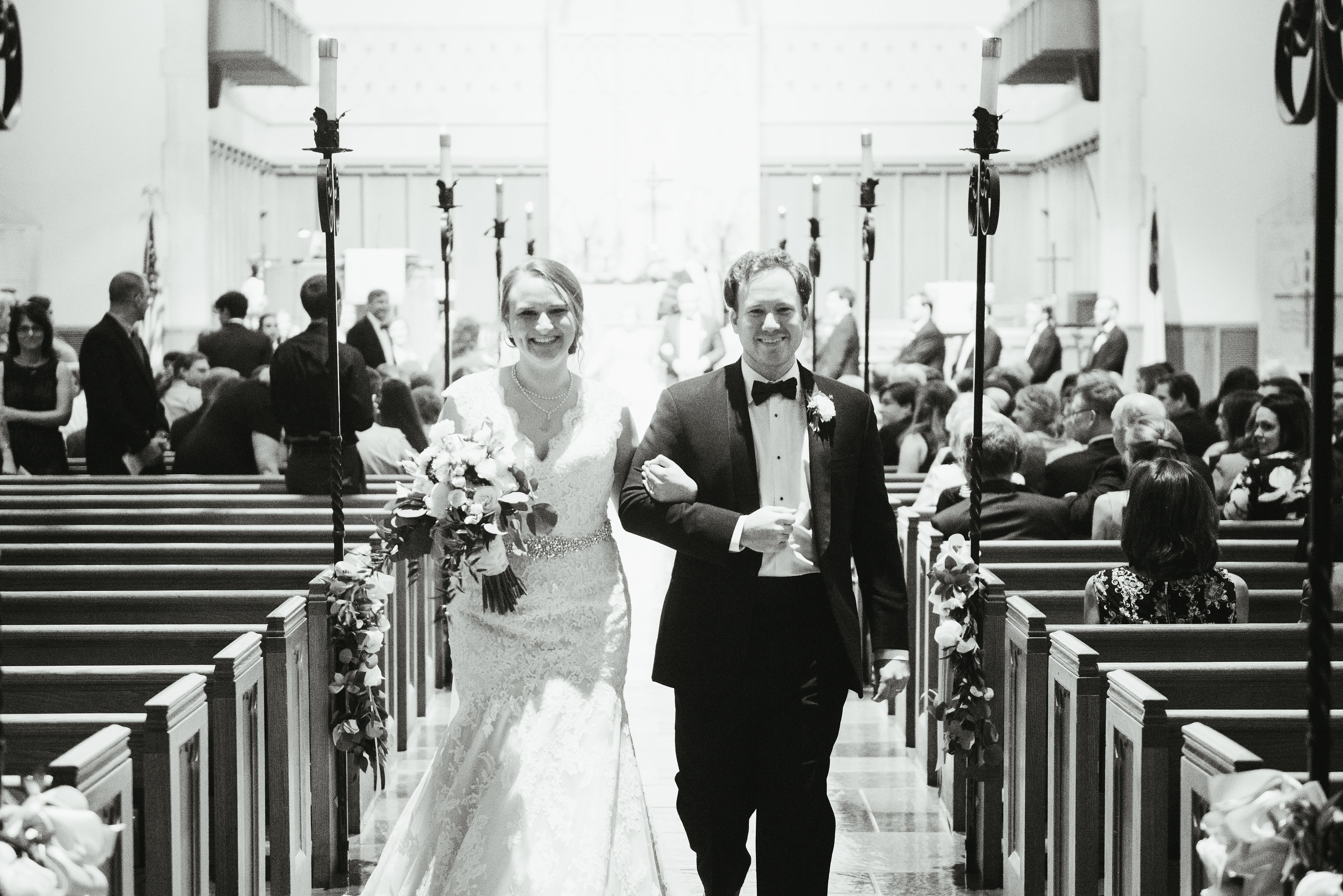
I didn't think anything could have the same affect as ministry on building someone's spiritual maturity. That's until I got married.

On its best days, marriage serves as the everyday practice ground for cultivation Christian virtue. In the honeymoon phase you develop this ideal picture of your spouse's character. That picture is way more flattering and impressive than the actual person; but, if the couple is loving committed to each other then there is this drive to live up to the ideal image created for you.

KJp-22

I've been married less than two months, and already I feel like I have to be better than I am. I can't slink off into the next room and sulk when I feel offended or frustrated. It's not fair to use the silent treatment as punishment, and it's not right to always play the victim card.

Not that we're having many arguments as newlyweds. 99% of the time we're still grossly in love and perfectly happy. However, being married means that I'm always being watched, and conversely, I'm always watching someone else. It's like having a live in accountability partner, but I suppose people who have been married more than ten minuets already know this.

Yet, on marriage's even better days, when you fail to live up to that wonderful person whom your spouse believes you to be, they are there to forgive you, and hold you, and maybe even let you be a little petty. They will encourage you to be better, but never lord it over you when you are not.

On it's even better days, marriage is where we have the a thousand opportunities to live like Jesus, to love like Jesus, and to forgive like Jesus. We are able to build each other up into the loving ideal we know that can be, but grace always covers us in the moments we can't measure up. Jesus loves all of us in just such a way. He knows we can be better and do better. But when we fail to live faithfully, he stands with open arms ready to forgive.

Why do you work in ministry?

I was asked recently to reflect on this question for a mini-staff retreat, and I thought I’d post the answer since, as true as it is, my reasons still confuse me….

20140918-170409.jpg

I do not so much feel called to ministry, as I feel created for ministry. Not long ago, I was discussing this topic with some fellow seminary students. We discussed our relationships with friends outside the seminary bubble and how frustrated we were sometimes not to have the same luxuries and clarity as them. One of my friends even confessed, quite rightly, that it was sometimes even embarrassing. And yet, we all shared a general notion that there is nowhere else we could. We were supposed to be here at Candler, studying the Bible and theology, and generally preparing for religious leadership.

Reflecting back, I am reminded of the Peter’s confession in John 6 after the feeding of the 5000. Jesus gives a difficult teaching concerning eating of his body and drinking of his blood, and most of the crowds turn away from him. Jesus asks his disciples if they will abandon him as well, to which Peter replies “Lord, to whom shall we go? You have the words of eternal life, and we have believed, and have come to know, that you are the Holy One of God.” (John 6:68, 69 ESV)

I sometimes feel like I wound up on this journey by accident, or at least so far back I don’t remember the beginning. It’s like hiking an unmarked trail deep into the woods, vague as to the destination, but sure it will be worth it.

(Photo By: https://www.flickr.com/photos/liebermann/)