

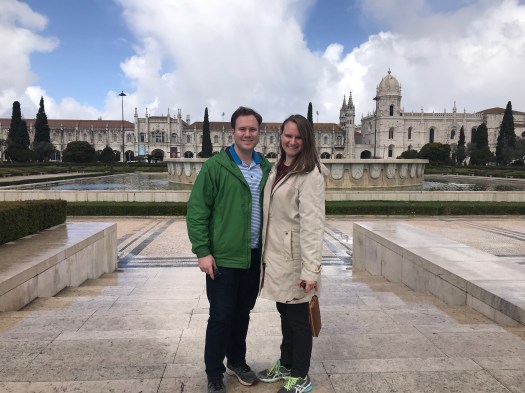
A few people have asked me why William and I decided to spend the money, time, and energy to visit Lisbon, Portugal. Well, there are a few reasons.
One reason is that it’s simply the trendy place to go. It’s a tourist destination that’s on the rise, and the people there are going above and beyond to make people feel welcome.
The city itself is lovey and the culture is wonderful. Plus, there’s many spectacular castles, churches, and monasteries.
But the biggest reason I wanted to see Lisbon is because of its tragic history in shaping theology.
In 1755, on All Saints Day when most the citiznes where gathered in church for worship, a nearly 9.0 earthquake struck the city. The quake then triggered a series of devastating tsunamis and knocked over scores of candles lit for the occasion of All Staints Day. The city was reduced to rubble and then burned. Casualty estimates range from 10,000-100,000, and cost nearly half the country’s GDP to repair.
The effect on European thought was profound. For the first time modern philosophers and theologians launched into an intense discussion about the goodness of God in the presence of suffering. This theological problem is know as theodicy. After the earthquake, it was no longer a given that God was benevolent. It was as if the whole continent discovered, or rediscovered, the problem of Job.
Immanuel Kant wrote three different essays on the incident. Voltaire penned an existential poem wresting with the problem of evil. He passionately engages the question saying:
But how conceive a God, the source of loveWho on man lavished blessings from aboveThen would the race with various plagues confoundCan mortals penetrate His views profound?Ill could not from a perfect being springNor from another, since God’s sovereign king;And yet, sad truth! in this our world ’tis foundWhat contradictions here my soul confound!The city of Lisbon took decades to rebuild. The citizens took generations to recover. However, the collection consciousness of Wester Christianity was forever changed. Today, we still wrestle with this same question. Hundred of books have been written, sermons spoken, and arguments waged in attack of this issues. Nevertheless, the nagging pain remains. And the question hangs in the air. Why Lisbon? Why me? Why God?I don’t know how to answer these questions, but sometimes I try. Mostly, we just to listen when someone asks because the answer cannot fill the void. As Christinans, we confess that only Jesus can, and he, more than anyone, knows how it feels to innocently suffer.
 Kena Hawkins Newkirk
I never knew this about Lisbon. Thank you Kena.