
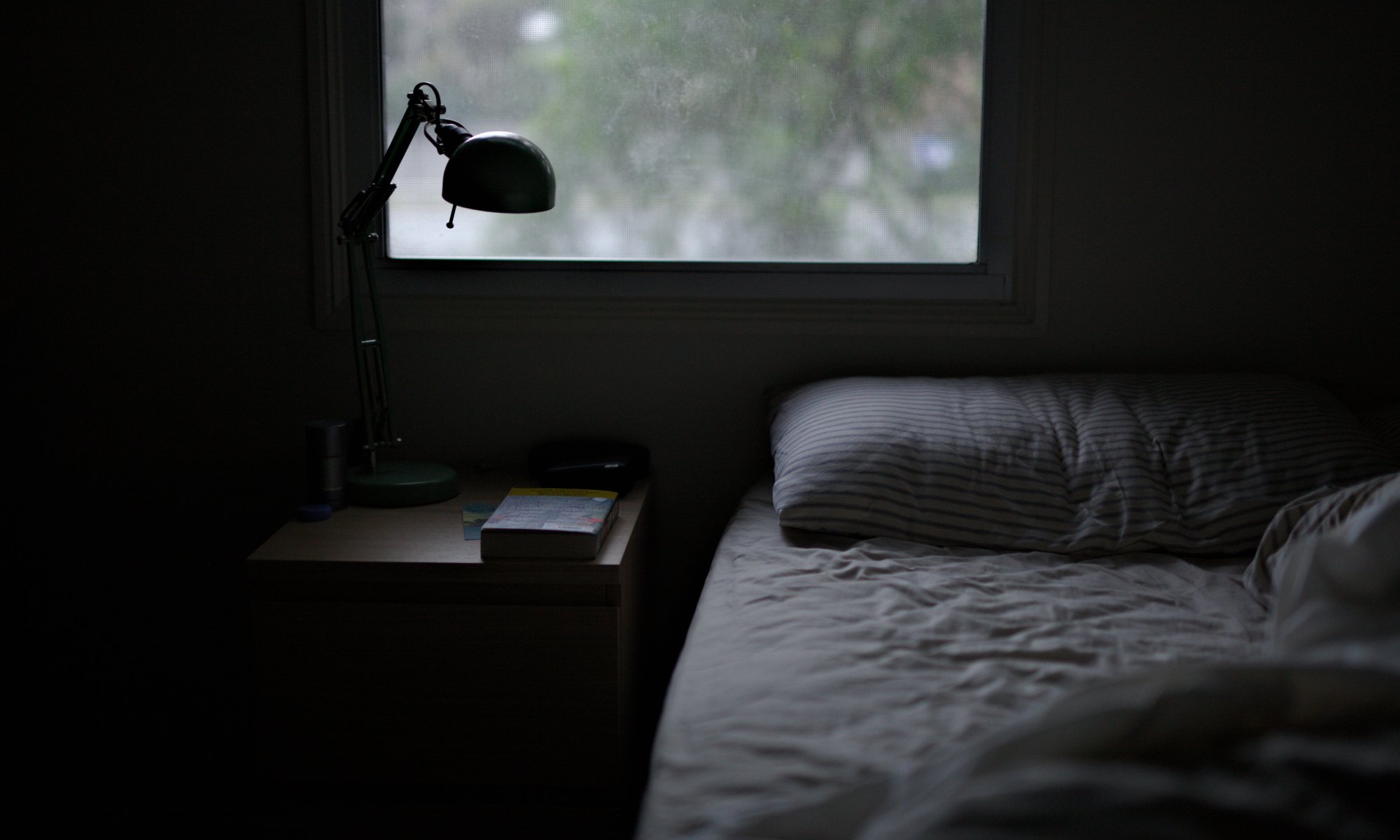
I’m writing this blog post the darkness of my bedroom with an ice pack on my head. I’m primarily using the talk to text feature because I can hardly open my eyes. The brightness of my screen is difficult to handle.
I have a migraine. I get migraines a lot, and I’ve been getting migraines and headaches since around first grade.
I’m pretty used to them now. I work through migraines when I can and try to ignore them until they become too debilitating.
Migraines are a chronic illness, and chronic illnesses function so much different than any severe or curable disease. If you have any kind of chronic illness you can understand the feeling of reluctant acceptance in dealing with your pain.
For the most part, I try to minimize the impact migraines have all my life when discussing them. I don’t want people to feel bad for me or make exceptions for me. I’m not writing this post to make excuses. There are people with severe and/or life-threatening illnesses, and I don’t want my migraines to garner sympathy from them, I really don’t need it. However, when I try to contextualize my headaches or any chronic illness, I am always drawn to the story of the woman with hemorrhaging who was healed when she reached out to touch Jesus.
Mark 5:25-34 tells the story of the woman who spends all of her fortunes trying to find a cure for her chronic disease which caused her to bleed uncontrollably for twelve years. When nothing worked, she pushed through the crowd around Jesus just to touch the fringes of his robe. For this last-ditch effort taken in faith, the woman is finally rewarded with healing.
“Daughter, your faith has made you well,” says Jesus, “go in peace, and be healed of your disease.”
What’s even more amazing about this story is that Jesus is actually on his way to heal a young girl who is terminally ill. Everyone’s attention in the story is focused on getting Jesus to the young girl’s bedside, but Jesus stops to acknowledge the healing of this woman whose life was not endangered, but whose quality of life was in ruins.
Many commentaries are quick to point out that the woman’s bleeding disorder caused her social isolation because it meant she was ritualistically unclean. People avoided her because of her chronic illness making it all the more tragic. But, I’ve always found this anecdote to be rather unnecessary. Illness always fosters social isolation, and chronic illness fosters chronic isolation, even for people today. We don’t need to import an ancient purity code for this to be true.
Isolation is caused in many ways. It can be caused when people don’t understand the illness, such as with depression or mental illness, or because the person suffering is unable to fully engage with others due to pain or diminished ability, such as migraines or arthritis. Life-threatening illness set a person apart too due to the frailty of the person or even the inability to fully connect with others because they simply cannot relate.
As for myself, I have spent countless hours in dark rooms with ice packs. I’ve missed parties and struggled through obligations in terrible pain. Again, I don’t really want sympathy. What I do want to be an advocate for my own healing.
In the past, I have often looked at 2 Corinthians 12:7-9 when trying to understand my migraines. In the passage, Paul says that he pleads with God to be relieved from mysterious suffering he calls “a thorn in my flesh.” God does not relieve him. Instead, he is told: “My grace is sufficient for you, for my power is made perfect in weakness.”
This is one way to think about chronic illness, but I’m starting to think it should always be read in conjunction with the story of this woman. She had been suffering for 12 years, and likely everyone he used to be invested in her healing has grown weary or become distracted. She doesn’t receive get-well-soon cards, and her problem isn’t flashy. But she never gave up on being healed and becoming whole. She lived with tenacious hope. Her illness may have never made the prayer list at church, but she didn’t give in. She was the strongest advocate of her own healing. She took charge and sought out Jesus, she didn’t wait for others to bring Jesus to her.
To be honest, I am not as sure as this woman that I will be healed of my migraines. I wish I had faith like her. But for now, I am inspired by her story. I love that she was her own advocate. She pushed through the crowd. She reached out for Jesus. I hope I can be as bold as her in working towards wholeness in Christ. And I look forward to the day when no one will experience isolation or pain.
 Kena Hawkins Newkirk
To say how much I’ve admired your faith and maturity seems so inadequate after reading your comparable story of chronic illness . I pray that your faith will continue to give you hope and strength in dealing with things out of your control. My thoughts and prayers are with you as they always are.
You’re so kind! Thank you!
Kena,
I rarely am on facebook, but was tonight and saw you post. I pray that your migraine has passed by now. I am so very sorry. I wanted to make sure that you have heard of the newest drug and the only drug created precisely for migraines. It is an injection, and it has changed my life regarding migraines. It is called Aimovig. I give myself two injections of it once a month. My neurologist had been speaking about it for years, but it recently was approved and put on the market in the past year. So worth a try! Like you, I had tried just about everything to fight the migraines, but this has proven to be such a blessing. I hope i am spelling it correctly. Call me if you need more info. Hope it helps! PS-crazy expensive because it is new, but they have cards online that greatly reduce the price or cover it all together.
Than you so much for the advice! I’ll look into it. I miss you!!